 Home
Home
Official Journals By StatPerson Publication
|
Table of Content - Volume 10 Issue 3 - June 2019
Outcome of surfactant therapy in neonates with respiratory distress
Mahfuza Shirin1*, M Monir Hossain2, Mohammad Abdullah Al Mamun3
1Associate Professor, 2Professor, Department of Neonatal medicine and NICU, Bangladesh Institute of Child Health, Dhaka Shishu (Children) Hospital, Dhaka, BANGLADESH. 3Associate Professor, Department of Paediatric Cardiology, Bangladesh Institute of Child Health, Dhaka Shishu (Children) Hospital, Dhaka, BANGLADESH. Email: mahfuzashirin@gmail.com
Abstract Background: Respiratory Distress is the most common presenting complaints and remains a leading cause of neonatal morbidity and mortality worldwide. Objectives: This study was conducted to evaluate the effect and the outcome of exogenous surfactant therapy in neonates with respiratory distress due to RDS, Meconium aspiration syndrome and pneumonia. Materials and Methods: This prospective study was conducted in the SCABU and Intensive Care Unit (ICU) of Dhaka Shishu (Children) Hospital. Neonates presented with respiratory distress due to RDS, Meconium aspiration syndrome, PPHN and pneumonia were included in this study. All included neonates were treated with bovine origin semi-synthetic surfactant as rescue therapy. Surfactant was administered by using the standard procedure. Effects of surfactant therapy, type and duration of respiratory support, complications and outcome were assessed. Paired t-test was used to compare the effectiveness of surfactant use. P value of <0.05 was considered significant. Results: Among the enrolled neonates about two-thirds (58.3%) were VLBW (<1500gm). Respiratory distress due to RDS was in 50.0% cases. All enrolled neonates were out-born and reached hospital within 8.4±2.1 hours of birth. Age of surfactant instillation was 19.5±6.8 hours and 91.7% neonates received surfactant within 24 hours of age. There was a significant (p<0.05) change in respiratory rate, SpO2, PCO2 and PO2 after six hours of surfactant administration. Respiratory support after surfactant administration required for a mean of 3.7±1.7 days and about half of them (41.6%) were managed by only nasal CPAP. Out of 12 neonates who received surfactant 25.0% developed complications and mortality rate was 25.0%. Conclusions: This study concluded that neonates with respiratory distress due to various causes improved with exogenous surfactant therapy. Key Word: Surfactant therapy, Respiratory distress, Neonates
INTRODUCTION Improvement of neonatal service has begun in Bangladesh from early nineteen eighties and onwards with improvement in survival rates of critically ill newborns, still mortality remains high1. Respiratory distress occurs in 0.96-12% of live births and is the most common presenting problem newborns encounter within the first 48-72 hours of life2,3 and remains the primary indication for admission to neonatal intensive care unit. Common causes of admission in neonatal intensive care unit is respiratory distress due to Respiratory distress syndrome (RDS), Meconium aspiration syndrome (MAS), Persistent pulmonary hypertension in newborn (PPHN) and pneumonia with high morbidity and mortality. Among the causes of respiratory distress in neonates MAS continue to be a serious cause that cannot be entirely prevented after birth. In total, this represents 4-9 per 1000 live births4. The stiff, atelectatic lungs of the premature infant with RDS produce serious respiratory distress in the form of tachypnea, retraction and grunting5. Pneumonia is an important cause of respiratory distress and accounts for significant morbidity and mortality, especially in developing countries6. The morbidity and mortality from these conditions are enormous. Most of themrequire NICU admission for respiratory failure and need mechanical ventilation, which is very expensive and, in many ways, have complications. Exogenous surfactant replacement is the treatment which may reduce the need for mechanical ventilation and reduce the morbidity. Natural, endogenous surfactant is a compound composed of phospholipids and proteins that forms a layer between the alveolar surface and the alveolar gas and prevents alveolar collapse by decreasing surface tension7. Surfactant deficiency in premature lungs causesthe onset of respiratory distress syndrome (RDS). Direct tracheal instillation of surfactant has been shown to reduce mortality and morbidity in neonates with RDS8-11. Alterations in endogenous surfactant play a role in the pathogenesis of some conditions other than RDS in neonates11. Surfactantin activation, secondary dysfunction and destruction may occur in neonates due to conditions such as meconium aspiration syndrome, persistent pulmonary hypertension of the newborn, neonatal pneumonia and pulmonary hemorrhage. Use of exogenous surfactant in neonates with RDS, MAS, PPHN and pneumonia may improve the survival, lead to reduced need for mechanical ventilation, also decrease NICU stay and treatment cost. Ultimately, neonatal mortality and morbidity will be significantly improved. Keeping this in view and working under the circumstances of limited facility of intensive care unit for neonates and to improve the outcome of babies presented with acute respiratory failure, we designed this study to evaluate the effect and outcome of surfactant therapy in neonates with respiratory distress due to RDS, Meconium aspiration syndrome and pneumonia. MATERIALS AND METHODS This was a prospective study, conducted from 1st November 2010 to 31st October 2011 in the SCABU and Intensive Care Unit (ICU) of Dhaka Shishu Hospital (DSH). Neonates presented with respiratory distress having two or more of following findings: Tachypnoea with respiratory rate >70/min, grunting respiration, cyanosis, moderate or severe intercostals, supraclavicular, suprasternal retractions, oxygen saturation in pulse oximeter<85% with FiO2 >60%, pH <7.25, PaCO2>60 mm Hg and PaO2<50 mmHg in FiO2>1.0 and suggestive findings of RDS/ MAS/Pneumonia in chest x-ray were included in this study. Neonates with congenital heart disease and structural malformation of lungs and GI tract causing respiratory distress at birth were excluded. Neonates with respiratory distress full filling the inclusion criteria were enrolled in this study after taking informed written consent. For each baby, a detailed history was recorded in a questionnaire, from the mother or the attendant. Clinical examination, oxygen saturation with/without oxygen by pulse oximeter and ABG were done at the time of enrollment. All enrolled neonates received a bovine origin semi-synthetic surfactant, Newfactanas rescue therapy at a dose of 4mL/kg (For ≤1500 gm weight babies 1 vial and >1500gm to ≤3000gm 2 vials Newfactan). Newfactan produced by Yuhan Corporation, Korea was available as dry powder form in a glass vial (125mg), need to dissolve with 4mL normal saline (0.9% NaCl) before instillation. After intubation Newfactan was instilled into the trachea via endotracheal tube by using feeding tube. For even distribution of surfactant, instillation was done by 4 equal aliquots in 4 different positions: head 10o up right and left position, then head 10o down right and left position, and ventilate for 30 sec to 2 min in between each aliquot. After completion of surfactant instillation neonates were either connected to the ventilator or extubated or put to nCPAP as required. Each patient was followed up after surfactant administration, by monitoring vital parameters, SpO2 by pulse oximeter, ABG and X-ray chest. Type and duration of ventilatory support, oxygen requirement, complications and outcome were also recorded. Supportive treatment was provided according to unit protocol. The collected data was analyzed thoroughly in SPSS version 20. Paired t-test was used to compare the effectiveness of surfactant therapy. P value of <0.05 was considered significant.
RESULTS AND OBSERVATION In this prospective study from November 2010 to June 2011, total 12 neonates with respiratory distress due to different causes received single dose surfactant. Among the enrolled cases 75% were male. Mean gestational age was 33.8±3.5 weeks and two-third (66.7%) of them were preterm. Mean birth weight was 1653±665.3gm and 58.3% of them were very low birth weight baby. Most of the neonates (91.7%) were admitted within 10 hour of age and their mean age at the time of admission was 8.4±2.1 hours (Table-I). Among the enrolled neonates, 83.3% (10/12) were born at hospital facility, three-fourth (75.0%) were delivered by LUCS and none of the mothers received antenatal steroid.
Table 1: Baseline characteristics of study participants (n=12)
Fifty percent of enrolled neonates were admitted with respiratory distress syndrome (RDS), 33.3% were with Meconium aspiration syndrome (MAS) along with co-morbidities and rest were due to preterm baby with pneumonia (table-II). Presenting signs and symptoms were respiratory distress (100%), tachypnoea (100%), followed by grunting respiration (83.3%), cyanosis (75%), chest indrawing (66.7%) and apnoea (25%) (Table-III).
Table 2: Distribution of neonates by diagnosis (n=12)
RDS= Respiratory distress syndrome; MAS= Meconium aspiration syndrome
Table3: Clinical findings at the time of enrolment (n=12)
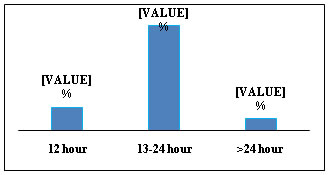
Multiple responses Mean age of surfactant administration was 19.5±6.8 hours with a range from 10 hours to 34 hours. Approximately 91.7% neonates received surfactant within 24 hours of age, out of them 16.7% received surfactant within 12 hours of age and 75.0% were received surfactant within 13 hours to 24 hours of age. Only 8.3% neonates received surfactant after 24 hours of age (Fig.-1). There was a significant (p<0.05) change in respiratory rate (RR), oxygen saturation (SpO2), partial pressure of CO2 (PCO2) and partial pressure of O2 (PO2) six hours after the administration of surfactant (Table-IV). Figure 1: Age of surfactant instillation (n=12) Figure 2: Modalities of respiratory support after surfactant administration (n=12)
Table 4: Comparison of clinical and ABG findings before and 6 hours after surfactant therapy(n=12)
*paired t test
DISCUSSION This study was done to find out the efficacy of surfactant therapy in neonates with respiratory distress due to various causes. Surfactant is a costly medicine, and due to its high cost, availability in our market is delayed in comparison to other Asian countries. For the last few years surfactant is available in Bangladesh but its use is very limited. So, we designed this study to find out the efficacy of surfactant in our setup. Exogenous surfactants are either animal lung extract or synthetic. Animal derived surfactants are either extracted from cow lungs or from pork lungs. Survanta, Newfactan, Alveofact, Infasurf are bovine and Curosurf is porcine in origin. In the past multiple studies have been performed to find out their efficacy and superiority, but no significant differences were found in clinical and economical outcome.12-14 In Bangaldesh commercial availability of surfactant is very limited. In this study we used a semisynthetic bovine lung extracted surfactant, Newfactan produced by Yuhan Corporation, South Korea. It is as effective as other surfactants, but cheaper than others15. DSH is a tertiary care post graduate institute hospital where with all facilities, an expert team of neonatologist are available to treat very sick newborns. Patients are referred from throughout the country specially those who need special care like NICU services. Therefore, we found neonates having respiratory distress due to various lung conditions who needed respiratory support and could enrollneonates with RDS as well as MAS and pneumonia to find out the efficacy of exogenous surfactant in these conditions. Treating RDS with exogenous surfactant has started in 197016, since then many clinical trials have been carried out during the 80s and 90s which proved effectiveness of use of surfactant to reduce mortality due to RDS.17,18 Now surfactant therapy has become a part of treatment protocol of RDS. Report of the study by Hossain et al also support the effectiveness of surfactant in the treatment of RDS in Bangladesh.19 In this study out of 12 neonates 50% 6 were preterm babies with RDS and of these 6 neonates, 4(66.6%) improved. In MAS, inhibition or inactivation of surfactant by meconium is one of the important factor of pathophysiology. To overcome this problem, use of surfactant as bolus or lavage has been found to improve oxygenation and reduce the requirement of ECMO but was not effective in reducing air leak or ventilator days20. Another study showed within 6 hours of age, use of surfactant improved oxygenation, reduced air leaks, severity of pulmonary morbidities and hospital stay21. This study found, 33.3% (4/12) neonates were with MAS, out of them 3 survived which support the findings of previous studies. Bacterial pneumonia in preterm and term babies cause problems with pulmonary surfactant functioning which makes breathing very difficult for those infants. In this study, all the enrolled neonates with pneumonia improved with single dose of surfactant. Deshpande el al reported similar type of improvement in preterm and term neonates with early onset pneumonia22. But others found surfactant is less effective in pneumonia than RDS and many required second dose of surfactant23,24. Early administration of surfactant as soon as possible, within 6 hours of age had higher efficacy25 This study has been conducted in Dhaka Shishu (Children) hospital, which is a children hospital, no maternity services are available here, so, all neonates are out born. They reached the hospital within 4.5 hours to 12 hours of age, so, the age of surfactant instillation was more than 6 hours of age, i.e., age of surfactant instillation was ranged from 10 hours to 34 hours with a mean of 19.5±6.8 hours and 83.3% neonates received surfactant within 24 hours of age. We also assessed the efficacy of surfactant replacement by comparing the changes in SpO2, PO2, PCO2 and respiratory rate six hours after surfactant instillation and found significant (p<0.05) changes in all four parameters. Similar types of efficacy were reported by Hossain et al19 and Kalkan et al25. Several studies showed that CPAP combined with surfactant after a brief intubation early in the course of RDS, had short-term benefit.26,27 Though all neonates were not suffering from RDS, we also found that 41.6% of them improved with only nasal CPAP support after surfactant replacement. Sepsis, pulmonary hemorrhage, IVH, PDA and pneumothorax were the commonly observed immediate complications after surfactant replacement. In this study, 25.0% neonates had complications and complications encountered were pulmonary hemorrhage (8.3%), and sepsis (16.7%). The percentage of development of complications was similar to others 28-30. Limitations of the study: This study was carried out with small sample size and only on out born patients, so it might not reflect the actual picture. The study was done in one tertiary care hospital which might not reflect the situation of the whole country.
CONCLUSION This study found that neonates with respiratory distress due to various causes improved with exogenous surfactant therapy, and its use shortened the duration of ventilation, reduced complications and mortality. We recommend a large-scale multicenter study in our set up to build our confidence regarding surfactant use in neonates. Also, policy has to be taken to ensure availability of surfactant in local market for its regular use.
REFERENCES
|
|
|||||||||||||||||||||||||||||||||||||||||||||||||||||||||||||||||||||||||||||||||||||||||||||||

 This work is licensed under a Creative Commons Attribution-NonCommercial 4.0 International License.